Policy Finder
Answer our simple questions to get started

students, workers & explorers going to New Zealand & travelling from New Zealand.

Answer our simple questions to get started



InsurancesafeNZ provides three different travel insurance policy categories: Studentsafe, Workersafe and Explorersafe. This means that if you’re travelling to New Zealand, travelling within New Zealand or temporarily leaving New Zealand, we have something to offer you. Use the Policy Finder to narrow your policy search and get a quote. Our website is also packed with great information on how to keep safe, how to make the most of your time abroad and how to understand your travel insurance policy better. If you need further assistance contact one of our friendly staff on our toll-free number 0800 486 004 (within NZ) or +64 9 488 1638 (outside of NZ).
A sudden medical emergency struck, a collapsed lung due to an undiagnosed cyst, Tasbiha's world was turned upside down. Tasbiha is an international PhD student studying Microbiology and Immunology at the University of Otago, she came to New Zealand to pursue her passion in science.
With her family thousands of kilometres away in Pakistan, Tasbiha faced one of the most challenging moments of her life. Thankfully, she had Studentsafe Medical and Travel Insurance when she needed it most, e
Studying in New Zealand is an adventure of a lifetime, which is why a range of unexpected bumps and accidents are covered under Studentsafe policies.
But when it comes to certain medical conditions, you may not be automatically covered. That’s why it’s important to disclose any medical conditions you want cover for.
The term “Pre-existing Medical Conditions” is commonly used when applying for insurance. This refers to your medical history and the full definition can be found on
Being in good health is key to embarking on an exciting study adventure in New Zealand.
Anyone planning to study in New Zealand for more than three months is required to apply for a student visa.
When applying for a new or to renew a visa, you may need to provide New Zealand Immigration with medical information to demonstrate an acceptable level of health.
Studentsafe policies do not cover medical costs for your visa application.
Studentsafe policies are desig
Your wellbeing is important which is why Studentsafe provides cover for medical and related expenses.
But before you make an appointment for check-ups related to your health, it’s important to understand what is and isn’t covered under your policy.
Studentsafe does not provide cover for certain medical tests listed as Exclusions under Section 1: Medical and Related Expenses as set out below:
9. Health screening, medical and dentals reviews or vaccinations.
&
Staying healthy plays a vital role in making the most of your study adventure. If you have been prescribed medication and are looking to make a claim, it’s important to understand what is and isn’t covered under your policy.
Just because a certain medication has been prescribed by your doctor, it does not mean that it is automatically covered.
Studentsafe does not provide cover for certain medical tests listed as Exclusions u
Starting a new school is a big change for anyone. It’s an extra big change if your new school is also in a new country! It’s natural to feel nervous and unsure about what school in New Zealand might be like, but the good news is that most schools here are friendly, supportive environments where students of all ages are encouraged to do their best and find subjects that they are interested in.
The most common way that schools
If you’re reading this article, you’ve already made a sensible choice. If you’re in a new relationship, or thinking about starting to date, it’s important to think about how you can ensure that you and your partner stay safe when you’re having a little extra ‘fun’.
So read on to learn more about what steps you should be taking to keep safe. The consequences can range from irritating to life-threatening – and that isn’t a gamble anyone should take.
Unless you’re really into skiing, winter in New Zealand isn’t really the most exciting time of year. It’s not cold enough for there to be pretty snow falling in the cities, but it’s still cold enough that you don’t want to spend time outside unless you have to. Instead of snow, we mostly get rain and wind. It’s certainly not terrible – but it does give you a good excuse to go somewhere sunny if you have the time and budge
Adjusting to a new workplace comes with challenges wherever you are in the world – and if you're in a new country as well as a new workplace, those changes can be even more extreme. New Zealand culture is quite friendly and informal, and this extends to many workplaces. But it can be difficult at times to understand where the limit is – how casual is too casual and what will make you look unprofessional? How formal is too formal and what will make you look too unapproachable?
Some of
A healthy worker is a more productive worker. It seems like an obvious statement to make, but in today’s working world, many workers feel that they have keep pushing and pushing to get results – even at the expense of their health and wellbeing. Workplaces need to be more supportive of their staff to make sure that they feel they are able to take time to get healthy if they are unwell, or to express their concerns if they are overburdened with stress.
In some ways many may find New Zealand airports easier to understand and less stressful than other airports. Our customs agents aren’t armed, and they tend to be friendly unless you give them reason not to be. The airports themselves aren’t huge multi-terminal places where you can get lost just trying to find the right place to check-in.
But in other ways, they can seem very strict for people not familiar with New Zealand and our unique place in the world. Our biosecurity rules in par
Every city has its secrets. When you live somewhere it can be very easy to get caught up in your day-to-day activities and forget about the beauty that surrounds you. However, while travelling it is a completely different story; you’re there to create memories and explore every corner
Flatting doesn’t have to be expensive. There are a number of ways you can set up a flat on a budget without losing out on quality and the occasional treat. To make sure that you get the best experience possible no matter what your income may be, we’ve brought together a few of our favourite tips and t
When you’re planning adventures overseas, there’s so much excitement that it can be easy to forget about the parts of travel that are a little less glamorous. Organising travel insurance may not be as thrilling as planning your routes and researching the major attraction

You’ve booked your flights and accommodation, bought your travel insurance, taken time off work and are just about ready to take off on your holiday!
Regardless of whether you’re a frequent flier or
For many people, the shift from university study to the working world is one of the biggest changes they will ever experience. Life until that point is focused on formal education – sitting in class, doing homework, taking notes… and then all of a sudden, it’s time to step out into
Graduating is an exciting process – it’s time to celebrate the years you’ve spent working hard towards getting your degree! But then it’s time to become a fully-fledged grown-up contributing your part to society.
Everyone has something to offer
Whe
Relocating to a new country for work is hugely exciting. Getting a new job and home and navigating new cultures, practices and languages is an immersive experience and can be incredibly consuming.
An “out with the old, in with the new” approach can be tempting – after all, you’re making a
Your Duty of Disclosure
When you apply for insurance cover, you are required by law to provide complete and up-to-date risk-relevant information – this is sometimes called disclosure of material facts. You must also disc
In general, the younger your children are the easier it will be for them to pick u
For many of us, our pets are part of the family. For expats intending to move overseas with their pet, planning and research before the move is essential. It is crucial to ensure the welfare of your beloved pet during and after transit, and that regulation surrounding the importation and exportation of pets is complied with.
Research animal import regulations for your new country of residence, to determine what conditions must be met for your pet to be allowed en
Reverse culture shock refers to the difficulty sometimes experienced when returning to your home country after studying abroad, and it is a common phenomenon among many international students today. It can result in unexpected difficulty in readjusting to the culture and values of your home country, now that the previou
There is a wide variety of scams that, unfortunately, are specifically targeted at international students preying on the vulnerability of living independently in a foreign country. International students are unaware of the normal local protocols and processes in place, making it hard to spot and identify any scam. Whether you are just starting university or wrapping up a master's, it is more important than ever for you to be cyber conscious.
Scammers are never going to go away, so i
Starting a new school is a big change for anyone. It’s an extra big change if your new school is also in a new country! It’s natural to feel nervous and unsure about what school in New Zealand might be like, but the good news is that most schools here are friendly, supportive environments where students of all ages are encouraged to do their best and find subjects that they are interested in.
The most common way that schools are arranged in New Zealand is primary, intermediate and secondary. Primary schools are for Year 1 to Year 6, for children aged five to ten or eleven. Intermediate school is just two years, Year 7 and Year 8, and students will be ten to thirteen. Finally, secondary school – also known as high school or college – is for Year 9 to Year 13, with students usually ranging in age from twelve to eighteen.
You may hear some adults refer to different years of schooling as ‘Form 1’ or ‘Third Form’ or other names like that. That’s just the way that the years in intermediate and secondary schools used to be known. Form 1 or First Form is the same as Year 7 – and Form 7 or Seventh Form is the same as Year 13. It’s good to know – just imagine that you’re fourteen and in Year 10 and suddenly a kind older person is asking if you’re in Fourth Form and wondering why they think you look so young!

New Zealand is generally quite a casual and informal country – and teaching is no exception. Teachers tend to be friendly and want to help their students learn and enjoy the subject, rather than forcing them to memorise facts they don’t want to learn.
At some schools, students even call teachers by their first names, which can be a big change for Kiwi kids, let alone international students! Most, though, will go by their title and family name. You can usually assume that a male teacher will be Mr Family name – with female students, they will usually tell you if they are Mrs Family name or Miss Family name – or if they prefer Ms Family name. It’s an easy mark of respect to remember which title they prefer.
There are schools of all kinds of sizes in New Zealand – so the number of students in your school will depend on which school you attend. The largest high schools have around 3000 students, with many of the more popular schools in Auckland having over 2000 students.
If you’re attending a high school in a city or large town, there could be anywhere between 150 and 500 students in your year level! You might not get to know everyone who’s at the same level as you, but you’ll start to meet and make friends with people in your classes.
As for classes, many will have around 30 students, especially for compulsory subjects. Again, the exact size will depend on the school that you are attending.
At intermediate school, most of the time everyone will study the same subjects. Subjects will usually include things like English (reading and writing), mathematics, science and technology. Often there will be drama, art and music included, and some schools may offer another language to study.
At high school, things are usually quite similar for the first two years – and then in Year 11, things change. English, mathematics and science will usually still be compulsory – but you’ll have different options for your other classes. There may be languages to choose from, social sciences like history and geography, technology, music, drama, art or design… there’s often a lot to choose from, so it can be hard to pick! Year 11 is also when formal assessment begins, with Level 1 NCEA (National Certificate of Educational Achievement – New Zealand’s secondary school qualifications).
Many schools will have compulsory English in Year 12, when you take Level 2 NCEA, with options for all other courses. By Year 13, and Level 3 NCEA, it’s typically all up to the student. Some of these rules are in place because of the requirements to get into university in New Zealand. The basic requirements for university entrance are 10 numeracy (mathematics) credits at Level 1 or above, 10 literacy (English) credits at Level 2 or above, and three Level 3 subjects.

Again, each school is different – and different subjects will also have different demands. It’s generally suggested that Year 9 students should expect up to an hour of homework each night, Year 10 students could be doing up to an hour and a half, an Year 11, 12 and 13 students should prepare for up to two hours. Some weeks you might have very little – other weeks you might have lots of projects and essays going on and be very busy indeed.
Physical education, also known as phys ed or P.E, is a compulsory part of the New Zealand curriculum up until Year 10, though many schools also make it compulsory for Year 11 students too. P.E. can include all sorts of things, from team sports to athletics to swimming to classroom-based health education classes.
School usually starts sometime between 8:20am and 9am. Many schools have form time/tutor group/home room (there different names at different schools!) right before your morning tea interval break. Your form teacher will be your contact for administrative information, and the students in your form class will often be the same people you have certain compulsory subjects with – like English or P.E.
Apart from form time your learning time is divided into periods. Some schools have four periods a day, some have seven – but the average these days seems to be five. So one day might look like:
8:40am – Period One – English
9:45am – Period Two – P.E.
10:40am – Form time
11:10am – Interval/Morning Tea
11:30am – Period Three – Social Studies
12:35pm – Period Four – Maths
1:35pm – Lunch
2:15pm – Period Five – Science
And school would finish at 3:10pm. Different days of the week have different subjects at different times.

It’s fairly likely, yes! Most secondary schools and many intermediate schools in New Zealand do have school uniforms. Often it will be a blouse or polo shirt with a skirt or kilt for girls, and a polo shirt or collar shirt with shorts or trousers for boys. Some schools are more flexible these days, allowing girls to wear trousers too. Some schools may have more formal uniforms for special occasions, with blazers and ties.
It may feel a bit boring to wear the same thing each day, but it saves you time in the morning! Many schools will have a ‘mufti day’ once a term, where you are allowed to wear your own clothes (and show off your own style) as long as you bring a gold coin donation ($1 or $2). The money raised will often go to school development projects or charities that the school supports.
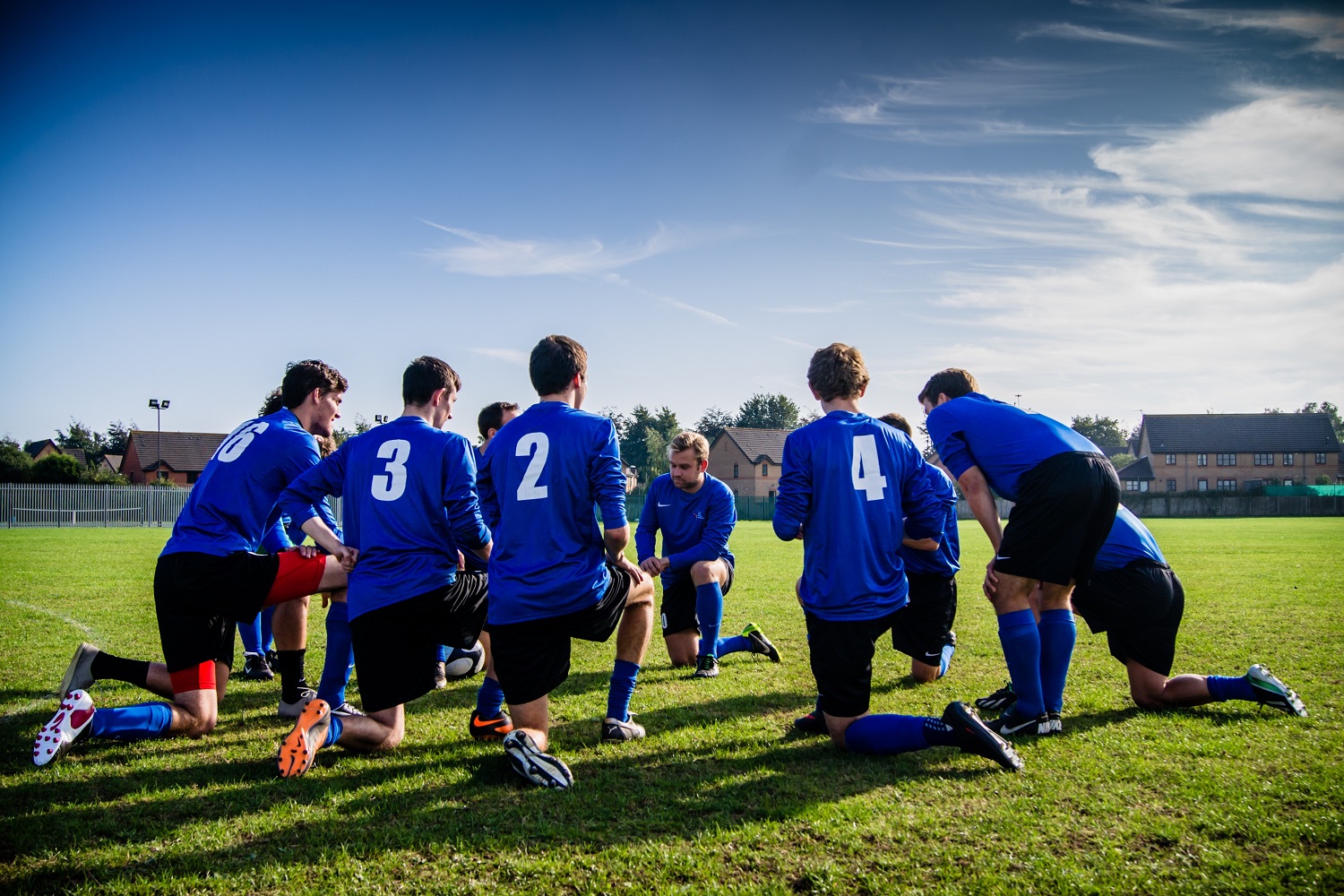
Your options will be different depending on what school you go to. Sport is a big part of life in New Zealand, and most schools will have a range of different sports on offer. Rugby, cricket, netball and soccer are all really popular. Many schools will also have hockey teams, and basketball is on the rise too! There may be different racquet sports like tennis, squash and badminton on offer, and there are almost certainly athletics and cross country teams for keen runners.
Many schools also have different music options. There may be choirs, orchestras, concert bands, stage bands, string ensembles… basically, if you sing or play an instrument, there will be a place for you to do it alongside other people. There are even schools with programmes for students who want to learn to play and sing in rock and pop bands, with a huge competition each year called RockQuest where high school bands compete against each other!
Drama and dance might also be on offer. While drama is often a classroom subject too, there are often other activities like performances for Shakespeare festivals and the opportunity to perform in a school musical. For people who think they can be clever, funny and quick, some schools even offer improvisation or theatre sports.
And one really great option for you if you’re interested in getting to know New Zealand’s traditional culture better is kapa haka! Most schools will have a kapa haka, or Māori cultural performance, group – and many will compete at Polyfest each year. Polyfest is the largest Polynesian festival in the world, and as well as kapa haka groups, there are stages for groups from Tonga, Sāmoa, Niue, Fiji, the Cook Islands and Niue. And in more recent times, they’ve added a ‘diversity’ stage, where other cultural groups can bring their performances – everything from Indian to Korean to Thai and many other cultures too! So even if you’re not sure about kapa haka, perhaps you can help make a new group with your cultural background.

InsurancesafeNZ Medical and Travel Insurance is issued and managed by AWP Services New Zealand Limited trading as Allianz Partners (NZBN 9429035270157) under binder with and on behalf of Mitsui Sumitomo Insurance Company, Limited (NZBN 9429039809810, FSP Number 20661) (Incorporated in Japan) as the underwriter.
You should read the Policy Wording and consider obtaining independent legal or financial advice before making any decisions about this insurance. Terms, conditions, limits, sub-limits and exclusions apply.
Mitsui Sumitomo Insurance Company, Limited - Financial Strength Rating.
Mitsui Sumitomo Insurance Company, Limited has a financial strength rating of A+ (Stable) given by S&P Global Ratings. The S&P Global rating scale* in summary form is:
The rating may be modified by the addition of a plus (+) or minus (-) sign to show relative standing within the major rating categories.
Further information on the S&P Global ratings is available here: https://www.spglobal.com/ratings/en/products-benefits/products/financial-strength-rating.

